About
Professor
Computer Sciences Department
College of Letters and Sciences
University of Wisconsin, Madison
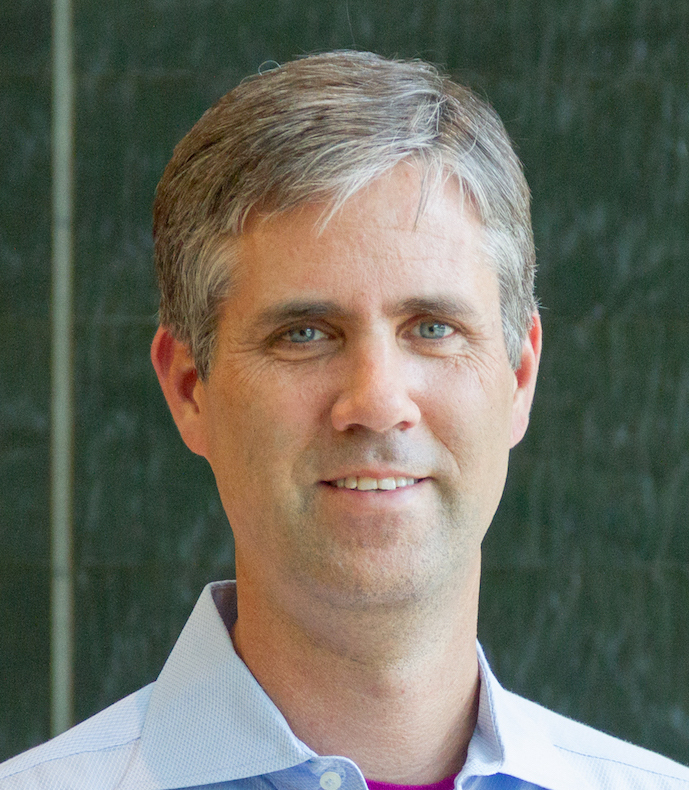
Michael Swift is a professor at the University of Wisconsin--Madison in the Department of Computer Sciences. His research focuses on the hardware/operating system boundary, including virtual memory, persistence and storage, new compute technologies, and device drivers. He received his BA from Cornell University in 1992 and Ph.D. from the University of Washington in 2005. Before graduate school, he worked at Microsoft in the Windows group, where he implemented authentication and access control functionality in Windows Cairo, Windows NT, and Windows 2000.
Research
My research focuses on bridging the growing gap between hardware and operating systems. My work seeks to improve the reliability and performance of hardware access while simplifying the programmer’s task.I frequently collaborate with computer architecture researchers to investigate new processor technologies, such as transactional memory, heterogeneous processors, and hardware accelerators. Our research has demonstrated how relatively modest changes to existing operating systems could greatly improve the efficiency of these new hardware designs.
Most recently, my work has expanded to new storage technologies. Solid-state storage technologies, such as flash and Intel's 3D Xpoint memory promise large-capacity storage at speeds much faster than disk. My ongoing work focuses on how these technologies change system software, and specifically, on how to expose it to applications.
I also have research projects on high-speed data center networking in collaboration with Professor Aditya Akella at UW--Madison, and cloud computing security with Professor Jeff Chase at Duke University.
My graduate work focused on device-driver reliability and showed how operating systems could be made robust against crashes in this critical piece of code. We then expanded upon this work to focus on how to simplify coding device drivers, how to make operating systems tolerate failures of attached devices and how to simplify the testing process for driver code.
Background
Prior to arriving in Wisconsin, I received a Ph.D. from the University of Washington, Seattle in 2006 under advisors Hank Levy and Brian Bershad. Before entering graduate school, I worked at Microsoft in the Windows NT group, where I implemetned authentication and access control functionality in Windows Cairo, Windows NT and Windows 2000. I attended Cornell University and earned a B.A. in Computer Science in 1992.2022-23 committee assignments
Director of Undergraduate StudiesChair, CS Diversity, equity, and inclusion committee
Member, CS Department Award Committee
Member, Letters and Sciences Diversity, Equity and Inclusion Committee
Member, Letters and Sciences Curriculum Committee
Member, International Academic Programs Faculty Advisory Committee
Research services
Editor in Chief, ACM Tranasctions on Computer Systems
Research
All research
My research covers interaction of operating systems and hardware, including devices and new processor/memory technologies.
- I lead the SCAIL research group on system support for novel technologies.
- I'm part of the SRC-funded PRISM project: Processing with Intelligent Storage and Memory
- I'm part of the NSF Expedtion LDOS project: Learning Directed Operating Systems.
- Previously, I led the Sonar research group on system support for novel technologies.
- Previously, I co-led the Multifacet group on computer architecture with Mark Hill.
- I'm also part of the Wisconsin Institute on Software-defined Datacenters in Madison (WISDoM) .
Projects
- New memory technology. New uses and interfaces to flash and storage class memory.
- Cloud computing. Investigating security issues in cloud computing
- Heterogeneous and accelerated processors. System and scheduling support for accelerators and dynamically heterogeneous processors.
- Data-center networking. End-host network scheduling. congestion control for RDMA and software offloads to smart NICs.
- Transactional memory. Making transactions and the operating system work together.
- Device drivers. Improving driver code and design through new architectures, better understanding, and bug finding.
Recent publications
-
All publications
- Quinn Burke, Ryan Sheatsley, Rachel King, Owen Hines, Michael M. Swift and Patrick McDaniel, Patrick. Fast Integrity Checking for Secure Cloud Storage: A Quantitative Approach. To appear in ACM Transaction on Computer Systems.
- Sujay Yadalam Sudarshan, Konstantinos Kanellis, Hayden John Coffey, Shivaram Venkataraman and Michael M. Swift. From Good to Great: Parameter Tuning in Memory Tiering Systems. To appear in IEEE Transactions on Computers Special Issue on Compute Express Link (CXL).
- Aditya Tewari, Sujay Yadalam, Arthur Peters, Saurabh Agarwal, Aditya Akella, Michael M. Swift and Christopher J. Rossbach. Observable Communication in Learning Directed Operating Systems. In Proceedings of the Workshop on Practical Adoption Challenges of ML for Systems (PACMI), October 2025.
- Konstantinos Kanellis, Sujaya Yadalam, Shivaram Venkataraman and Michael M. Swift. Striking the Right Chord: Parameter Tuning in Memory Tiering. In Proceedings of the 3rd Workshop on Disruptive Memory Technology (DIMES), October 2025.
- Vladimiro Paschali, Andrea Monterubbiano, Francesco Fazzari, Michael Swift and Salvatore Pontarelli. InXpect: Lightweight XDP Profiling. In Proceedings of the 3rd Workshop on eBPF and Kernel Extensions (eBPF'25), September 2025.
- Anjali and Michael M. Swift. Locked In, Leaked Out: Measuring Isolation via Kernel Locks. arXiv:2507.21248, Jul. 2025.
- Jason Zhijingcheng, Mingkai Li, Aditya Badole, Trevor E. Carlson, Michael Prateek Saxena. Caplification: Bridging Capability-Aware and Capability-Oblivious Software. In Proceedings of the 30th ACM Symposium on Access Control Models and Technologies (SACMAT), July 2025.
- Quinn Burke, Ryan Sheatsley, Rachel King, Owen Hines, Michael Swift, and Patrick McDaniel. Efficient Storage Integrity in Adversarial Settings. In Proceedings of the IEEE Symposium on Security and Privacy (S&P 2025), May 2025.
- Divyanshu Saxena, Jiayi Chen, Sujay Yadalam, Yeonju Ro, Rohit Dwivedula, Eric H. Campbell, Aditya Akella, Christopher J. Rossbach and Michael Swift. How I learned to stop worrying and love learned OS policies. In Proceedings of The ACM SIGOPS 20th Workshop on Hot Topics in Operating Systems (HotOS XX), May 2025.
- Quinn Burke, Ryan Sheatsley, Yohan Beugin, Eric Pauley, Owen Hines, Michael Swift, Patrick McDaniel. Efficient Storage Integrity in Adversarial Settings. arXiv:2504.07041, Apr. 2025.
- Konstantinos Kanellis, Sujay Yadalam, Fanchao Chen, Michael Swift, Shivaram Venkataraman. From Good to Great: Improving Memory Tiering Performance Through Parameter Tuning. arXiv:2504.18714, Apr. 2025.
- Quinn Burke, Ryan Sheatsley, Rachel King, Owen Hines, Michael Swift, and Patrick McDaniel. On scalable integrity checking for secure cloud disks. In Proceedings of the 23rd USENIX Conference on File and Storage Technologies (FAST 2025), Feb. 2025
Contact Information
608-890-0131
swift at cs dot wisc dot edu
7574 Morgridge Hall
Computer Sciences Department
University of Wisconsin-Madison
1205 University Ave
Madison, WI 53706 USA