

Flip to back
Flip to front

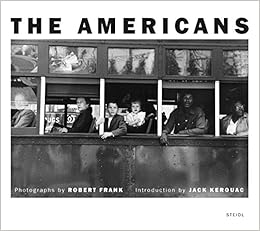
The Americans Hardcover – May 30, 2008
$24.91
FREE Shipping on orders over $35.
Temporarily out of stock.
Order now and we'll deliver when available. We'll e-mail you with an estimated delivery date as soon as we have more information. Your account will only be charged when we ship the item.
Ships from and sold by Amazon.com.
Gift-wrap available.




NO_CONTENT_IN_FEATURE
Tell the Publisher!
I'd like to read this book on Kindle
Don't have a Kindle? Get your Kindle here, or download a FREE Kindle Reading App.
I'd like to read this book on Kindle
Don't have a Kindle? Get your Kindle here, or download a FREE Kindle Reading App.

Want to know our Editors' picks for the best books of the month? Browse Best Books of the Month, featuring our favorite new books in more than a dozen categories.
Product Details
Would you like to update product info or give feedback on images?.
|
Editorial Reviews
Amazon.com Review
Armed with a camera and a fresh cache of film and bankrolled by a Guggenheim Foundation grant, Robert Frank crisscrossed the United States during 1955 and 1956. The photographs he brought back form a portrait of the country at the time and hint at its future. He saw the hope of the future in the faces of a couple at city hall in Reno, Nevada, and the despair of the present in a grimy roofscape. He saw the roiling racial tension, glamour, and beauty, and, perhaps because Frank himself was on the road, he was particularly attuned to Americans' love for cars. Funeral-goers lean against a shiny sedan, lovers kiss on a beach blanket in front of their parked car, young boys perch in the back seat at a drive-in movie. A sports car under a drop cloth is framed by two California palm trees; on the next page, a blanket is draped over a car accident victim's body in Arizona.
Robert Frank's Americans reappear 40 years after they were initially published in this exquisite volume by Scalo. Each photograph (there are more than 80 of them) stands alone on a page, while the caption information is included at the back of the book, allowing viewers an unfettered look at the images. Jack Kerouac's original introduction, commissioned when the photographer showed the writer his work while sitting on a sidewalk one night outside of a party, provides the only accompanying text. Kerouac's words add narrative dimension to Frank's imagery while in turn the photographs themselves perfectly illustrate the writer's own work. --This text refers to an out of print or unavailable edition of this title.
From Publishers Weekly
In this 50th anniversary reissue, celebrated photographer Frank maintains the format (left page: brief caption, right page: photo) and introduction (Jack Kerouac: "with the agility, mystery, genius, sadness and strange secrecy of a shadow Frank photographed scenes that have never been seen before on film"), the images themselves have been re-scanned, re-cropped by Frank and, in two cases, changed. Frank's images, taken all across the country, leave the viewer with a solemn impression of American life. From funerals to drug store cafeterias to parks, Frank recorded every shade of everyday life he encountered: the lower and upper classes, the living and dead, the hopeful and destitute, all the while experimenting with angle, focus and grain to increase impact. Preceding an exhibition that will tour U.S. galleries in 2009, this volume will no doubt introduce new generations to Frank's inimitable record of daily life fifty years ago. Kerouac says, fittingly, that "after seeing these pictures you end up finally not knowing any more whether a jukebox is sadder than a coffin"; those who don't comprehend Kerouac's comment have yet to experience this classic collection. 83 tri-tone plates.
Copyright © Reed Business Information, a division of Reed Elsevier Inc. All rights reserved.
Copyright © Reed Business Information, a division of Reed Elsevier Inc. All rights reserved.
More About the Author

Discover books, learn about writers, read author blogs, and more.
Customer Reviews
Most Helpful Customer Reviews
93 of 97 people found the following review helpful
By
Vince Leo
on March 27, 2002
Format: Hardcover
Verified Purchase
3 Comments
Sending feedback...
Like an elusive text in search of itself, Robert Frank's 1958 book The Americans has changed format each of the four times it's changed publishers. From the text heavy French version to the oversized aperture reprint, Frank has continued to refine his work each time it appears in print.
In the Scalo version, the place-name captions have been removed from the pages opposite the photographs and collected in the back of the book. Forget any ideas you might have of Frank's book being a travelogue. In place of the itinerary, the Scalo edition finally establishes the ORDER of the book's photographs as the crucial ingredient in Frank's complex vision of America. The 83-photograph sequence cuts between elliptical narrative of the open road and comparative sociology of dead-end lives as Frank turns free association into inescapable logic and then back again. The result is the most masterful combination of photographs in book form.
The subjects of Frank's photographs roam this fractured typology like prophets locked in an unstable time loop. Geography no longer takes center stage as the formative element of their photographic selves. In some small but significant way, the americans in the Scalo edition reclaim the intentionality of their sadness, anger, and alienation. The bitter and often unwilling nature of their engagements with Frank take center stage, each as profound an act of refusal as Frank's own denunciation of the pasteboard optimism of '50s America.
In the Scalo version, the place-name captions have been removed from the pages opposite the photographs and collected in the back of the book. Forget any ideas you might have of Frank's book being a travelogue. In place of the itinerary, the Scalo edition finally establishes the ORDER of the book's photographs as the crucial ingredient in Frank's complex vision of America. The 83-photograph sequence cuts between elliptical narrative of the open road and comparative sociology of dead-end lives as Frank turns free association into inescapable logic and then back again. The result is the most masterful combination of photographs in book form.
The subjects of Frank's photographs roam this fractured typology like prophets locked in an unstable time loop. Geography no longer takes center stage as the formative element of their photographic selves. In some small but significant way, the americans in the Scalo edition reclaim the intentionality of their sadness, anger, and alienation. The bitter and often unwilling nature of their engagements with Frank take center stage, each as profound an act of refusal as Frank's own denunciation of the pasteboard optimism of '50s America.
Thank you for your feedback.
If this review is inappropriate, please let us know.
Sorry, we failed to record your vote. Please try again
42 of 43 people found the following review helpful
By
D. B. Parker
on July 27, 2008
Format: Hardcover
4 Comments
Sending feedback...
We're lucky to have this edition. Robert Frank is an old man with health issues now. That he is healthy enough to oversee this work is wonderful. Everything about this edition - especially in comparison to the 2007 Delpine edition I purchased earlier this year - is first-rate. I wish I had known this was coming out!
The book is a little smaller than the Delpine, but that's the only real negative (if it is one) I can think of. The main thing to me is that the photos themselves are how Frank intended them to look. Gone are the overly-lightened faces that plague the Delpine book. This is a pet peeve of mine that kills many photos in this Photoshop age. This is very obvious in the New Orleans trolley photo. In the Delpine work, the faces of the white passengers are totally washed out, and the black faces are awkwardly lightened (someone apparently thought they were helping Frank's work). That's all corrected here. In this Steidl edition things are shown as they were intended. One can even see details in the face of the man at far left, even though it is partially obscured by a window reflection.
Also, on several photos more of the frame is visible. This was most noticeable to me in the Butte, Montana photo of the woman looking out the car window, with several children in the back seat. A good portion of the left side of the photo is now visible, along with more shown on the top and bottom. The new crop just seems more "right." Not too mention that the face of the child in the middle of the photo is too light in the older edition.
Simply put, comparing the two editions is an eye opener. I first saw these photos years ago in a much earlier edition (I believe it was the 1969 Aperture work) and I still marvel at the depth of the images in that printing.Read more ›
The book is a little smaller than the Delpine, but that's the only real negative (if it is one) I can think of. The main thing to me is that the photos themselves are how Frank intended them to look. Gone are the overly-lightened faces that plague the Delpine book. This is a pet peeve of mine that kills many photos in this Photoshop age. This is very obvious in the New Orleans trolley photo. In the Delpine work, the faces of the white passengers are totally washed out, and the black faces are awkwardly lightened (someone apparently thought they were helping Frank's work). That's all corrected here. In this Steidl edition things are shown as they were intended. One can even see details in the face of the man at far left, even though it is partially obscured by a window reflection.
Also, on several photos more of the frame is visible. This was most noticeable to me in the Butte, Montana photo of the woman looking out the car window, with several children in the back seat. A good portion of the left side of the photo is now visible, along with more shown on the top and bottom. The new crop just seems more "right." Not too mention that the face of the child in the middle of the photo is too light in the older edition.
Simply put, comparing the two editions is an eye opener. I first saw these photos years ago in a much earlier edition (I believe it was the 1969 Aperture work) and I still marvel at the depth of the images in that printing.Read more ›
Thank you for your feedback.
If this review is inappropriate, please let us know.
Sorry, we failed to record your vote. Please try again
38 of 40 people found the following review helpful
By
No One Important
on December 24, 2004
Format: Hardcover
5 Comments
Sending feedback...
Robert Frank with this small little book changed the course of photography. He changed the way people take photographs. He changed the way we look at photographs. He changed the definition of what was an acceptable or good photograph. The way Monet and Picasso changed how one could paint, Frank changed the way one could photograph.
How did he do this? He basically introduced the "icongraphic photograph" to the world. Take for example, his picture in the Americans of a political rally for Ike. It is of a man standing against a blank wall, playing the tuba. But the tuba's opening obscures his face, all you see is the big blank dark opening of the the tuba where his eyes and mouth are suppossed to be. And then right behind the tuba, almost coming out of it, a flag, an American flag, though shapeless, and formless and it snakes out of the picture. On the man's lapel is a big "For Ike" button. At the time, this was a radical photograph and statement about politics and the role of the individual in political life; remember this was 1957.
There are many many many other photographs like this throughout the Americans: St. Peter taking on City Hall. The American flag covering the faces of the people at a parade. The jukebox everywhere. The signs screaming "No Negroes Allowed" while on the next page is a photograph of an older black women holding in her arms, caring for, a young white baby. Frank clearly asking, screaming, why is it okay for them to care your for babies but not okay for them to use the same toilet as you?
It is a subtle but very powerful book. And once you see it, once you get it, you can never see a photograph the same way again.
He has influenced every photographer who has come after him.Read more ›
How did he do this? He basically introduced the "icongraphic photograph" to the world. Take for example, his picture in the Americans of a political rally for Ike. It is of a man standing against a blank wall, playing the tuba. But the tuba's opening obscures his face, all you see is the big blank dark opening of the the tuba where his eyes and mouth are suppossed to be. And then right behind the tuba, almost coming out of it, a flag, an American flag, though shapeless, and formless and it snakes out of the picture. On the man's lapel is a big "For Ike" button. At the time, this was a radical photograph and statement about politics and the role of the individual in political life; remember this was 1957.
There are many many many other photographs like this throughout the Americans: St. Peter taking on City Hall. The American flag covering the faces of the people at a parade. The jukebox everywhere. The signs screaming "No Negroes Allowed" while on the next page is a photograph of an older black women holding in her arms, caring for, a young white baby. Frank clearly asking, screaming, why is it okay for them to care your for babies but not okay for them to use the same toilet as you?
It is a subtle but very powerful book. And once you see it, once you get it, you can never see a photograph the same way again.
He has influenced every photographer who has come after him.Read more ›
Thank you for your feedback.
If this review is inappropriate, please let us know.
Sorry, we failed to record your vote. Please try again
16 of 17 people found the following review helpful
By
acangemi@perrone.com
on December 29, 1998
Format: Hardcover
Comment
Sending feedback...
this is the only book to buy if you are interested in photography. every image is true. if you ever have a chance to view the actual prints, don't miss them. i have learned more about photography from looking at this book than any other source. it is a masterpiece.
Thank you for your feedback.
If this review is inappropriate, please let us know.
Sorry, we failed to record your vote. Please try again
Most Recent Customer Reviews
What Other Items Do Customers Buy After Viewing This Item?


