CS639 Undergraduate Elective Topics in
Computing:
Parallel and Throughput-Optimized Programming
Spring Semester 2023
Course outline
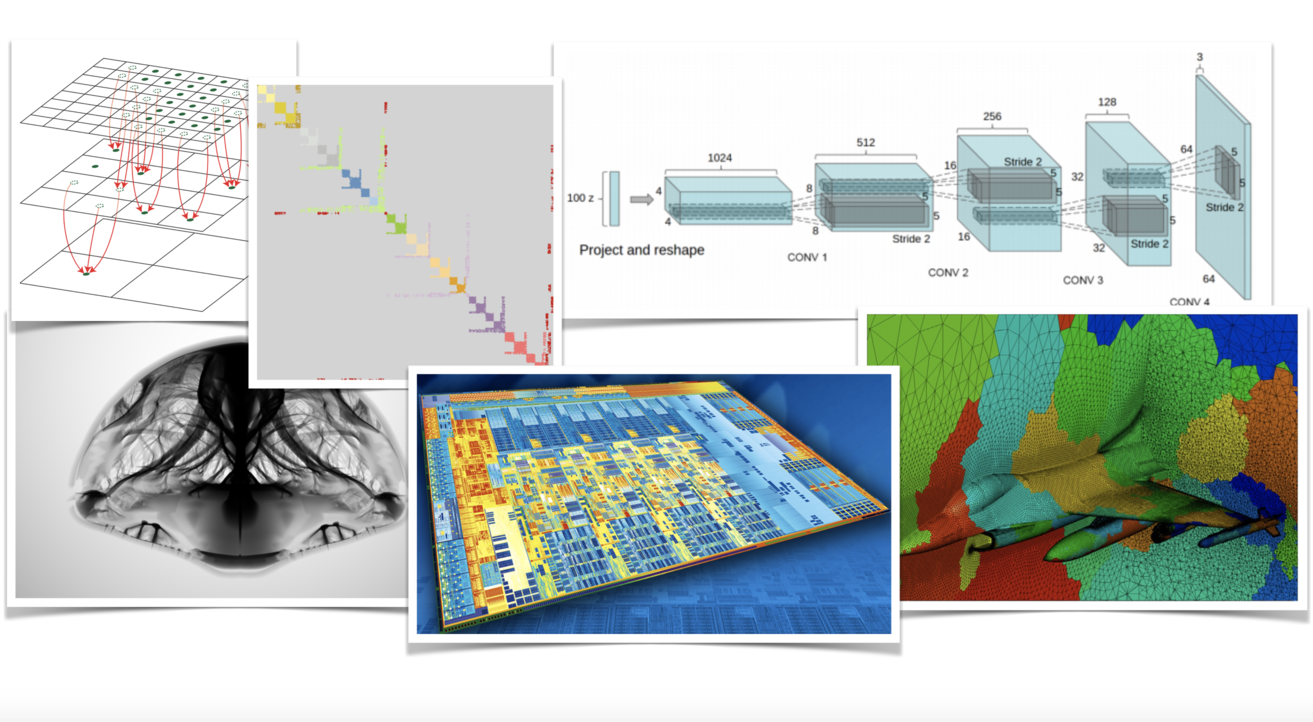
Modern computing platforms offer dramatically increased computational capabilities compared to typical systems in relatively recent generations. Today, a consumer-grade gaming desktop can rival a typical medium-scale cluster from the early 2010’s, while a well-equipped single-chassis server may pack computational power commensurate with supercomputers that would appear in the TOP500 list about 8 years ago. This dramatic increase in computational density, however, comes with significant new challenges for the platform programmer that seeks to extract optimal performance: algorithms that exploit the full potential of modern computers need to be properly designed as to be in sync with parallel programming paradigms, and be more aware than ever of the idiosyncrasies of the underlying computing architecture.
This (new and experimental) course aspires to discuss challenges as well as best practices for the design of high-performance codes, with a depth and scope tailored to be accessible to undergraduates with modest programming experience. Rather than regarding the algorithm being used as an immutable specification (and focusing on the APIs that can help engineer a parallel implementation), we shall test and often alter then algorithmic approach itself in order to create better conditions for a high-efficiency parallel implementation. At the same time, we will attempt to deepen our awareness of the intricate architectural traits of the computing platform to better understand obstacles against and opportunities for optimal efficiency.
This is the third offering of this Topics course (first offered in Spring
2020), and the scope will be consciously kept narrow as to allow for adequate depth and analysis of the topics covered. Specifically, we will emphasize shared-memory, single-chassis multiprocessor systems as our primary target platform (with GPUs garnering some, but limited coverage), and forego highly heterogeneous platforms or distributed systems such as network-connected multi-node clusters. Our application focus and case studies will also be drawn primarily from numerical algorithms, scientific computing and computational engineering (with higher-level applications such as image processing, computational physics or machine learning naturally emerging from those). We will not explicitly emphasize combinatorial workloads (e.g. search and hashing), algorithms that rely heavily on unstructured, random data access, or applications that do not have high-throughput processing as a central design objective.
Programming paradigms, design practices, and platform considerations to be discussed in class may include:
Topics from which case studies and sample workloads will be drawn include the following facets of scientific computing:
General information
Lecture meeting time : Tue/Thu 1:00-2:15pm, Social Sciences 6240
Office hours : Wednesdays 1:15-2:15pm CS6387, or via appointment.
Instructor : Eftychios Sifakis
Office : Computer Sciences building, Room 6387
Email : sifakis <at> cs <dot> wisc <dot> edu
Prerequisites : Working knowledge of the C programming language is presumed, as well as familiarity with principles of machine organization. CS354 or equivalent is strongly recommended (can be waived with instructor consent). Familiarity with basic linear algebra is desirable, but no formal prerequisite is enforced.
Lecture Slides, Assignments, and other materials
Refer to the course page
on Canvas. The slides
from the first lecture include detailed information on class logistics,
topics, and evaluation.