|
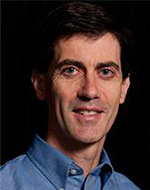
Thomas W. Reps is the
J. Barkley Rosser Professor & Rajiv and Ritu Batra Chair Emeritus in the
Computer Sciences Department of the University of Wisconsin, which he
joined in 1985 and where he served on the faculty until 2024.
Reps is the author or co-author of four books and more than two
hundred forty papers describing his research (see
http://www.cs.wisc.edu/~reps/).
His work has concerned a wide variety of topics, including
program slicing,
dataflow analysis,
pointer analysis,
model checking,
computer security,
code instrumentation,
language-based program-development environments,
the use of program profiling in software testing,
software renovation,
incremental algorithms,
and attribute grammars.
Professor Reps received his Ph.D. in Computer Science from Cornell
University in 1982.
His Ph.D. dissertation won the 1983
ACM Doctoral Dissertation Award.
Click here for
a summary of some of Reps's research achievements, and
here for his CV.
His collaboration with
Professor Tim Teitelbaum
at Cornell University from 1978 to 1985 led to the creation of two
systems—the Cornell Program Synthesizer and the Synthesizer
Generator—that explored how to build interactive programming tools
that incorporate knowledge about the programming language being
supported. The systems that they created were similar
to modern program-development environments, such as
Microsoft Visual Studio
and Eclipse,
but pre-dated them by more than two decades.
From 1988 to 2019, Reps was President of GrammaTech, Inc.,
which he and Teitelbaum co-founded to commercialize their research.
From 1985 to 2014, Professor Reps was the co-leader, with
Professor Susan Horwitz—until she
passed away in 2014—of a
research group
at the University of Wisconsin that has carried
out many investigations of program slicing and its applications in
software engineering.
Reps's most recent work concerns both program analysis, program
synthesis, and modeling code using machine-learning techniques.
In 1996, Reps served as a consultant to DARPA to help them plan a
project aimed at reducing the impact of the Year 2000 Problem on the
U.S. Department of Defense.
In 2003, he served on the F/A-22 Avionics Advisory Team, which provided
advice to the U.S. Department of Defense about problems uncovered during
integration testing of the plane's avionics software.
Reps's 1988 paper on interprocedural slicing, with
Susan Horwitz
and his then-student David Binkley,
was selected as one of the 50 most influential papers from the ACM SIGPLAN
Conference on Programming Language Design and Implementation (PLDI), 1979-99.
According to
Google Scholar,
the 1988 paper and the subsequent journal version
have received over 2,500 citations.
His 2004 paper about analysis of assembly code,
with his student Gogul Balakrishnan,
received the ETAPS Best-Paper Award for 2004 from the
European Association for Programming Languages and Systems (EAPLS).
His 2008 paper about a system for generating static analyzers for machine instructions,
with his student Junghee Lim,
received the ETAPS Best-Paper Award for 2008 from EAPLS.
In 2010, his 1984 paper ``The Synthesizer Generator,''
with Tim Teitelbaum, received an
ACM SIGSOFT Retrospective Impact Paper Award.
In 2011, his 1994 paper ``Speeding up slicing,''
with Susan Horwitz, Mooly Sagiv, and Genevieve Rosay, also received an
ACM SIGSOFT Retrospective Impact Paper Award.
Reps's twenty
papers in ACM Transactions on Programming Languages and Systems (TOPLAS)
total 987 pages.
Five of his students, Gogul Balakrishnan, Akash Lal, Junghee Lim, Aditya Thakur, and Venkatesh Srinivasan,
have been recipients of the Outstanding Graduate Student Research Award given by
the University of Wisconsin Computer Sciences Department.
Akash Lal was also a co-recipient of the
2009 ACM SIGPLAN Outstanding Doctoral Dissertation Award,
and he was
one of the 18 awardees
selected for the
2011 India TR-35 list
(top innovators under 35).
In 2003, Reps was recognized as a
``Highly Cited Researcher''
in the field of Computer Science—one of 230 worldwide who received such
recognition by the
Institute for Scientific Information.
As of June 2014, Reps was ranked 4th (field rating) and 7th (citations) on Microsoft Academic Search's
list of
most-highly-cited authors in the field of Programming Languages,
and 13th (field rating) and 23rd (citations) on its
list of most-highly-cited authors in the field of Software Engineering.
Reps has also been the recipient of an NSF Presidential Young
Investigator Award (1986), a Packard Fellowship (1988),
a Humboldt Research Award (2000), and
a Guggenheim Fellowship (2000).
He is an ACM Fellow (2005), and was elected as a foreign member of
Academia Europaea in 2013.
Reps
received
the ACM SIGPLAN
Programming Languages Achievement Award for 2017.
With A. Lal, M. Musuvathi, S. Qadeer, and J. Rehof,
Reps received the 2023 CAV Award
for the ``introduction of context-bounded analysis and its application to systematic testing of concurrent programs.''
Reps has held visiting positions at
the Institut National de Recherche en Informatique et en Automatique (INRIA)
in Rocquencourt, France (1982-83),
the University of Copenhagen, Denmark (1993-94),
the Consiglio Nazionale delle Ricerche in Pisa, Italy (2000-2001), and
the University Paris Diderot—Paris 7 (2007-2008).
For additional biographical information, see
and family background below:
- Information about the life of Susan Horwitz (1955-2014), including
slides (46 MB) and
commentary from the
Susan B. Horwitz Commemoration, Wisconsin Institute for Discovery, November 1, 2014
- Obituary for Constance P. Reps (1921-2009);
presentation (286 MB) by John W. Reps at
the Hangar Theater, Ithaca, NY, June 21, 2009
- Obituary for John W. Reps (1921-2020);
slides (108 MB) and
commentary from the
John Reps Memorial, Cornell Architecture, Art, and Planning, November 19, 2021
|