|


|
||||
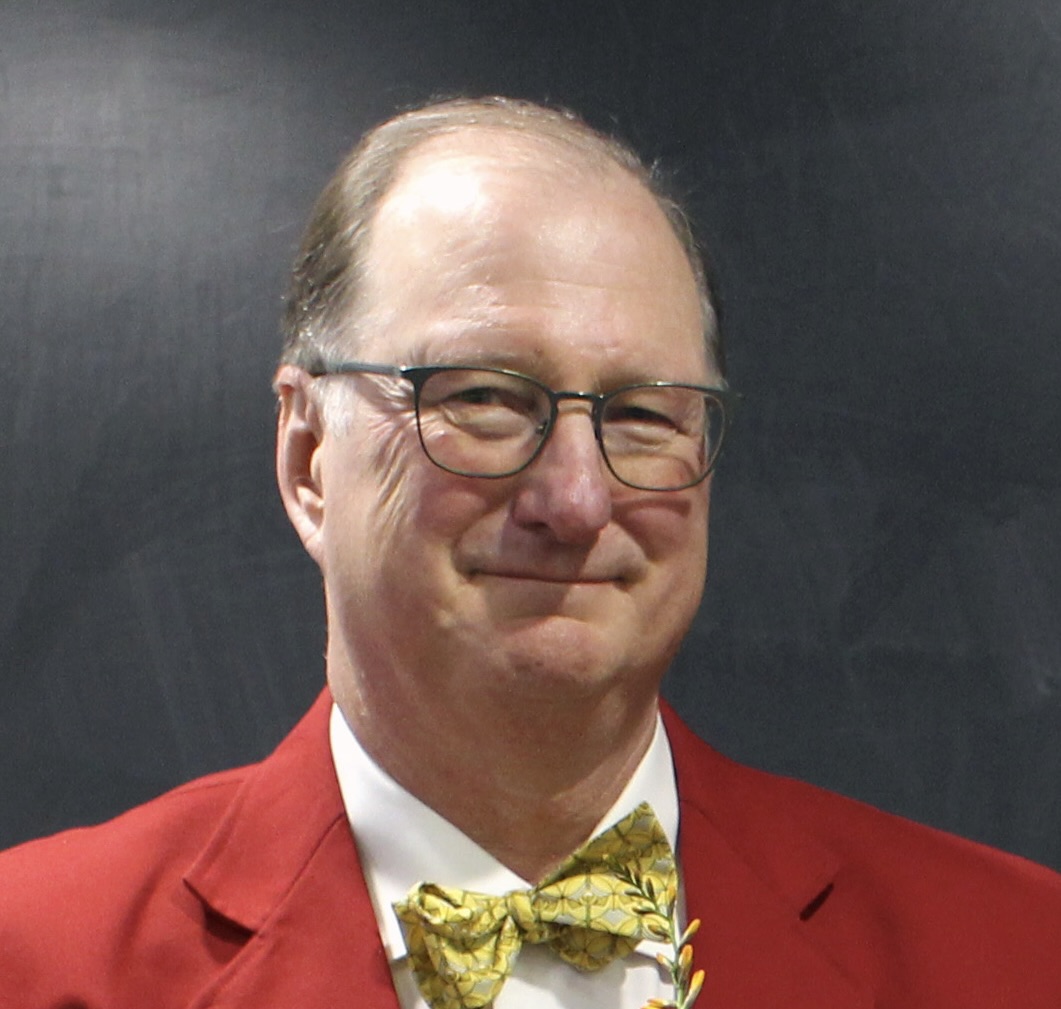
Research Interests: Computer architecture, parallel computing, memory systems, and performance evaluation. Whatever may be the limitations which trammel inquiry elsewhere, we believe that the great state University of Wisconsin should ever encourage that continual and fearless sifting and winnowing by which alone the truth can be found. --Report of the Board of Regents in 1849. Teaching Interests: Computer engineering (CS/ECE 252), computer organization (354 and 552), computer architecture (752), parallel computer architecture (757), and topic courses (758 and 838). Ph.D.: (Computer Science) University of California - Berkeley, 1987. Short Biography: Mark D. Hill is the Gene M. Amdahl and John P. Morgridge Professor Emeritus of Computer Sciences at the University of Wisconsin-Madison (http://www.cs.wisc.edu/~markhill), following his 1988-2020 service in Computer Sciences and Electrical and Computer Engineering. His research interests include parallel-computer system design, memory system design, and computer simulation. Hill's work is highly collaborative with over 170 co-authors. He received the 2019 Eckert-Mauchly Award and is a fellow of AAAS, ACM, and IEEE. He served on the Computing Community Consortium (CCC) 2013-21 including as CCC Chair 2018-20, Computing Research Association (CRA) Board of Directors 2018-20 & 2025-present, and Wisconsin Computer Sciences Department Chair 2014-2017. Hill was Partner Hardware Architect at Microsoft (2020-2024) where he led some software-hardware pathfinding for Azure. Hill has a PhD in computer science from the University of California, Berkeley. Longer Biography: Mark D. Hill is the Gene M. Amdahl and John P. Morgridge Professor Emeritus of Computer Sciences at the University of Wisconsin-Madison (http://www.cs.wisc.edu/~markhill), following his 1988-2020 service in Computer Sciences and Electrical and Computer Engineering. He served on the Computer Community Consortium (CCC) 2013-21 including as CCC Chair 2018-20, Computing Research Association (CRA) Board of Directors 2018-20 & 2025-present, and Wisconsin Computer Sciences Department Chair 2014-2017. Hill was Partner Hardware Architect at Microsoft (2020-2024) where he led some software-hardware pathfinding for Azure Dr. Hill's research targets computer design and evaluation. He has made contributions to parallel computer system design (e.g., memory consistency models and cache coherence), memory system design (caches and translation buffers), computer simulation (parallel systems and memory systems), software (e.g., page tables and cache-conscious optimizations), deterministic replay and transactional memory. For example, he is the inventor of the widely-used 3C model of cache behavior (compulsory, capacity, and conflict misses), and co-inventor of the memory consistency model sequential consistency for data-race-free programs that serves as a foundation for the C++ and Java multi-threaded memory specifications. Hill's work is highly collaborative with over 170 co-authors and especially with his long-time colleague David A. Wood. Hill received the ACM - IEEE CS Eckert-Mauchly Award in 2019 for seminal contributions to the fields of cache memories, memory consistency models, transactional memory, and simulation. He was selected as a John P. Morgridge Endowed Chair of UW-Madison Computer Sciences in 2015. He was selected AAAS Fellow (2022) for distinguished contributions to advanced computer architecture, particularly for memory system design, named an ACM Fellow (2004) for contributions to memory consistency models and memory system design, elevated to a Fellow of the IEEE (2000) for contributions to cache memory design and analysis, and was awarded the ACM SIGARCH Alan Berenbaum Distinguished Service Award in 2009. He was won four important University of Wisconsin-Madison awards: WARF Named Professorship in 2013 (2nd winner from CS), Kellett in 2010 (3rd winner from CS), Vilas Associate in 2006, and Romnes Fellow in 1997. He co-wrote Primer on Memory Consistency and Cache Coherence in 2011 (downloaded over 10K times) and 2nd Edition in 2020, and co-edited Readings in Computer Architecture in 2000, is co-inventor of over 40 United States patents (several of which have been co-issued in the European Union & Japan), was an ACM SIGARCH Director (1993-2007), won an NSF Presidential Young Investigator award in 1989, and member of informal ISCA and MICRO Halls of Fame. He is co-author of eight papers selected by IEEE Micro Top Picks, co-won the best paper award in VLDB 2001, and has an H-index over 90 with 37,000 citations. He has held visiting positions at Google (2018), Advanced Micro Devices (2011), University of Washington (2011), Columbia University (2010), Universidad Politecnica de Catalunya (2002-03) and Sun Microsystems (1995-96). Dr. Hill earned a Ph.D. in Computer Science from the University of California - Berkeley in 1987, an M.S. in Computer Science from Berkeley in 1983, and a B.S.E. in Computer Engineering from the University of Michigan - Ann Arbor in 1981. Curriculum Vitae, Career Summary (3/2020), Publicity Photo, Academic Ancestors (1000 years!) and Posterity US National Science Foundation (NSF) News Story including video going back to Hill's childhood, 2014. Timeline of 40 Years of Computer Architecture at UW-Madison (8MB).
|