



|
|
|

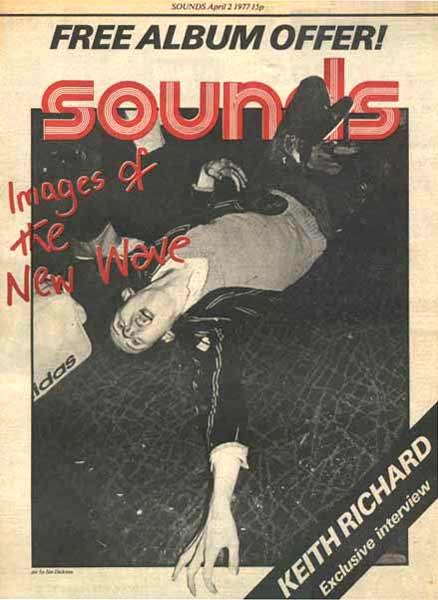 The story of The Nips begins where punk begins: on the streets and in the clubs of London in the late 1970s. Shane MacGowan first turned up on the cover of Sounds in 1976 as "the face of '76," one of the new breed of punks who had made the scene their own. By day he worked the Rock On record stall in Soho Market; by night he was front and centre at every gig that mattered. When he encountered the Sex Pistols on June 15, 1976 — he had gone to see the 10lers and stumbled onto history instead — it changed him completely. "Seeing the Sex Pistols changed my life," he said. "They were the best group I've ever seen." Shane wrote his punk zine Bondage under the name "Shane O'Hooligan" in December 1976 where he opined on the Sex Pistols, The Jam, and Eater. Read the full zine here.
 It was his friend Shanne Bradley who pushed things from hanging around to actually playing. A bassist who had previously played with the Laundrettas, Shanne named the band The Nipple Erectors — a joke that turned out to have real consequences, since radio stations wouldn't play them and venues wouldn't book them. In December 1977 they got serious: the original three were Shane, Shanne, and future NME writer Adrian Thrills — who had also created the fanzine 48 Thrills — recording demos in Shanne's bedroom. Their first song, written by Shane, was called "My Degeneration." Later, guitarist Roger and a drummer called Arcane joined for actual gigging, and Thrills moved on to write for NME. They played their first proper gig on an audition night at the Roxy. As one early review put it, they were "the band where punk meets Ted and lives."
In June 1978 they released their debut single, "King Of The Bop" / "Nervous Wreck," on Soho Records — a label run out of the Rock On stall by Stan Brennan and Phil Gaston. Shane later summed up the recording session with characteristic honesty: "We were all drunk and on drugs. Shanne was in a coma." The single didn't get played and it didn't get bought, but a decade later copies were changing hands for £10. By August 1978 the lineup had already shifted dramatically. Shanne renamed herself Dragonella (to avoid confusion with Shane), and the band shortened its name to The Nips. Replacing Roger, the new guitarist was Larry Hinrichs, a familiar figure on the punk circuit. The drum seat cycled through Phil Rowlands (of Eater), a drummer called Grinny, another called Gerry, and Mark Harrison (of the Bernie Torme Band). By 1979, Shane watched rockabilly making its comeback and The Nips went with it — earning the label "Punkabilly" from the press, since, as Dragonella admitted, "we couldn't play it very well." The second single, "All The Time In The World," was a different animal entirely: a driving R&B number that rejected what Shane called "new music" — the world of the Police and the Tourists. Then came "Gabrielle," released in late 1979 through their own Soho label with Chiswick Records picking it up for distribution. It hit number one in the NME indie charts, got Radio 1 airplay, and saw the band gigging alongside the Jam, Dexy's Midnight Runners, and the Purple Hearts. Paul Weller praised them publicly and talked of producing them.  The Nips' final lineup featured guitarist James Fearnley and drummer Jon Moss, who had previously played with the Damned and Adam and the Ants. Gavin Douglas (nicknamed "Blondie"), who had first joined in May 1979, also returned for this period. A live album, Only The End Of The Beginning, was recorded in Wolverhampton in March 1980 and released that October to muted praise. By that point the band were already dead on their feet. One final single, "Happy Song" / "Nobody To Love," followed in October 1981 on Test Pressing / Burning Rome Records. As Shane had said: "The only people who were in The Nips from the beginning to the end were me and Shanne."
The Nips called it a day in 1980. Shane and a friend played Irish rebel songs on an improvised stage at Cabaret Futura in late 1982 — a night that planted the seed of something new. Within months, he and Jem Finer and Spider Stacy had formed Pogue Mahone, later the Pogues. Shanne Bradley co-founded the Men They Couldn't Hang in 1984 — using the band name Shane had originally had in mind for his own group — and James Fearnley became the Pogues' accordionist. Jon Moss went on to drum for Culture Club. The Nips themselves were finally given a proper retrospective in December 1987 when Big Beat Records released Bops Babes Booze & Bovver, collecting their finest moments. A CD reissue with bonus tracks followed on Ace Records/Big Beat in September 2003. They were never famous in their own time. But they were, as ZigZag magazine put it in 1980, "the only true, honest, naive and ever changing garage band around." Read more in the Record Collector article, the excerpt from The Lost Decade, and the ZigZag interview from the Press Archive. |